One of the most common complaints that I encounter as a pain medicine physician who evaluates and treats polo players is elbow pain. Athletes often notice pain in their lateral elbow (highlighted on thumbnail image), that is aggravated by swinging a polo mallet. The pain usually comes on gradually rather than abruptly, and it tends to affect men and women equally. Lateral elbow pain is very common in sports and jobs that require loaded and repeated gripping motion, and wrist extension. You may have heard of this condition referred to as “tennis elbow.” In the medical community, we refer to this syndrome as lateral epicondylitis or epicondylosis.
Lateral epicondylitis occurs as a result of eccentric overload of the common tendon of the forearm wrist extensor muscles, the “ECRB,” extensor carpi radialis brevis. With repetitive strain and stress of the forearm and wrist extensor muscles, the tendon may become inflamed or damaged (epicondylitis), and the tissues may undergo remodeling (epicondylosis). This tissue damage can present as tenderness and pain at the lateral elbow, made worse by wrist extension. One may also see mild swelling and tenderness to touch, as well as some weakness in grip strength. Essentially, the pain gets worse with activity and better with rest.
Other causes of elbow pain
When evaluating the underlying cause of lateral elbow pain, it’s important to rule out other conditions that can mimic lateral epicondylitis. If the pain came on gradually, it could be a sign of radial nerve entrapment. The radial nerve runs under the forearm muscles, which often can become overdeveloped in polo. The elbow also has bursae that can become swollen and inflamed, a condition known as bursitis. If the pain started following a traumatic injury, such as a crash or fall, it is important to have a doctor examine the joint to make sure there are no bone fractures, dislocations, or injuries to the joint itself. If you are experiencing neck pain that radiates down the arm to the elbow, along with weakness in the arm and grip strength, this could be a result of nerve root irritation from cervical disc disease. Radiating neck pain, significant swelling, rapid increase in size of the elbow area, new masses, redness, rashes, fevers, and multiple joints with pain at the same time, are all signs of more serious medical conditions. If you experience one of more of these symptoms, you should seek care from a medical professional urgently.
Management of lateral epicondylitis and minor lateral elbow pain
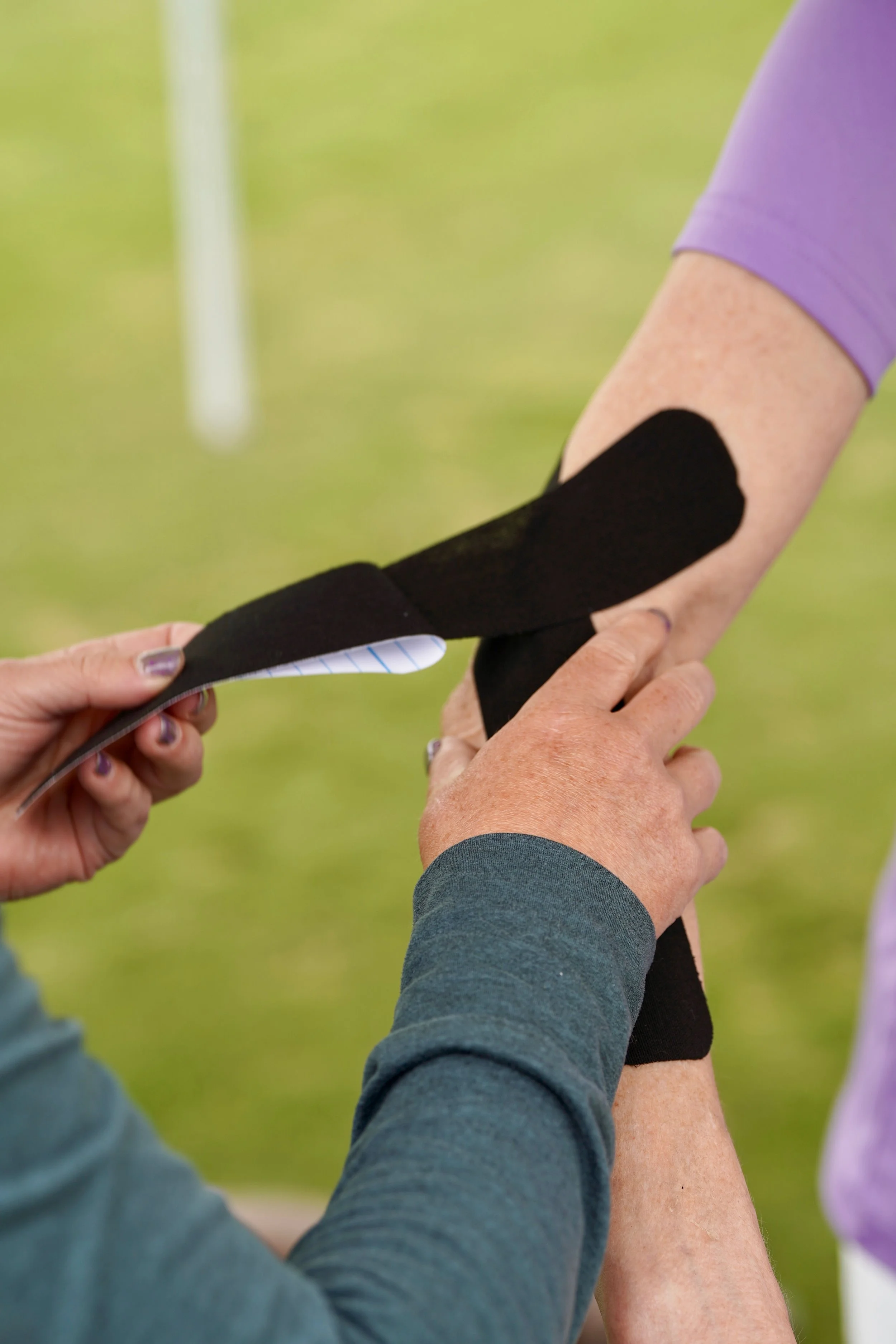
The best way to manage lateral elbow pain is to prevent it from occurring in the first place, and I will review some tips and tricks for this below. In this section, I want to touch upon some of the things you can do if you already find yourself struggling with lateral elbow pain. If the pain is mild, started gradually, and you don’t find yourself with any of the emergency signs we discussed earlier, you can start with conservative measures. These include activity modification and rest; meaning it probably isn’t wise to stick and ball 6 horses in this moment. Using ice for 10 mins on/10 mins off, over-the-counter pain and anti-inflammatory medications, topical pain medications, supportive bracing or kinesio taping, massage, hot/cold contrast therapy, or red light therapy are all good places to start. More invasive strategies include injections with steroid and local anesthetic near the tendon, prolotherapy (a combination of needling with local anesthetic or an irritant solution directly in the tendon) or platelet-rich plasma injection (PRP) into the tendon. In some cases, surgical intervention may be of benefit; and this should be considered when pain persists despite trying less invasive strategies.
Prevention
“In addition to taking care of your overall health and nutrition, one of the most profound ways you can prevent elbow pain is to optimize your swing.”
A proactive approach to injury prevention involves identifying factors that contribute to injury and modifying those that are under your control. Older age, gender, and weather/field conditions during play are factors that you cannot modify, but don’t become discouraged, as there are many factors that you can influence. Modifiable factors include optimizing your nutrition and overall health status, avoiding smoking and excessive drinking, improving your flexibility, adductor (inner thigh muscle) strength, core strength, and the stability of your periscapular region (shoulder blade) and shoulder girdle (rotator cuff/upper back muscles) along with your grip strength. You can go back to basics and ensure that you are using proper form and technique with your swing, and you can modify the weight of your mallet head and cane, and ensure your mallet’s grip is sized appropriately.
When it comes to your own health, you should strive to set yourself up for success. You can’t control your age, but you can take in adequate protein and nutrients to build and maintain lean body mass and to optimize bone health. Smoking, drinking, and an inflammatory diet put muscle (and many other tissues and organs) at risk for injury and also inhibit the body’s natural ability to recover and repair damage. Medical conditions such as diabetes, high cholesterol, and metabolic syndrome can be optimized by following the recommendations of your primary care physician.
In addition to taking care of your overall health and nutrition, one of the most profound ways you can prevent elbow pain is to optimize your swing. Of course, I realize that this is much easier said than done. The main power of the swing comes from a combination of torso rotation and force generated through the shoulder, all while maintaining your position out of a saddle, moving at an extremely high speed while controlling a horse. This is a full-body exercise, as it engages your adductors (inner thighs), core (abdominal and erector spinae muscles, spine stabilizers), back (latissimus, middle trapezius, and lower rhomboid muscles), muscles that move the shoulder and shoulder blade (rhomboids, trapezius, rotator cuff), and muscles that control grip and wrist extension. If a person lacks strength or mobility in any one of these critical areas, or if someone uses poor swing technique, excessive stress will be transmitted to the elbow, and pain and inflammation will likely ensue. If you are not “getting out of the saddle,” not getting your shoulder over the ball with your head down, if your swing is rushed, breaking at the elbow, lacking a smooth follow-through, you are likely putting undue stress on your elbow. It is a near heroic feat to have perfect swing mechanics, and to achieve this in the setting of fatigue, or under pressure in a game, adds an even higher probability that some stresses to the elbow will occur, even in the most experienced pro. Working with a strength and conditioning trainer is a great way to build strength in these targeted areas. A physical therapist is also an amazing resource for strengthening these systems and improving flexibility. Physical therapists are also great at identifying imbalances in strength and flexibility, and designing curated plans for rehabbing in the setting of pain and injury.
I hope you find this introduction to lateral elbow pain helpful, and please feel free to reach out with any questions through our Instagram, as we really appreciate your feedback. This advice is for your educational benefit only, and is not intended to replace an individualized, professional medical consultation. If you find yourself struggling with pain or limitations, especially following a specific injury or incident, please schedule a visit with your doctor. If an injury is new and severe, consider going to urgent care or your local emergency department. I am also available for professional medical consultations and evaluations, so feel free to book with PoloMD if you need help in a pinch! If you are interested in learning more about how to strengthen and rehab elbow pain, stay tuned for our next blog: Lateral elbow pain part 2: Exercises to enhance strength and flexibility, and minimize stress to the elbow.